
Sleepwear
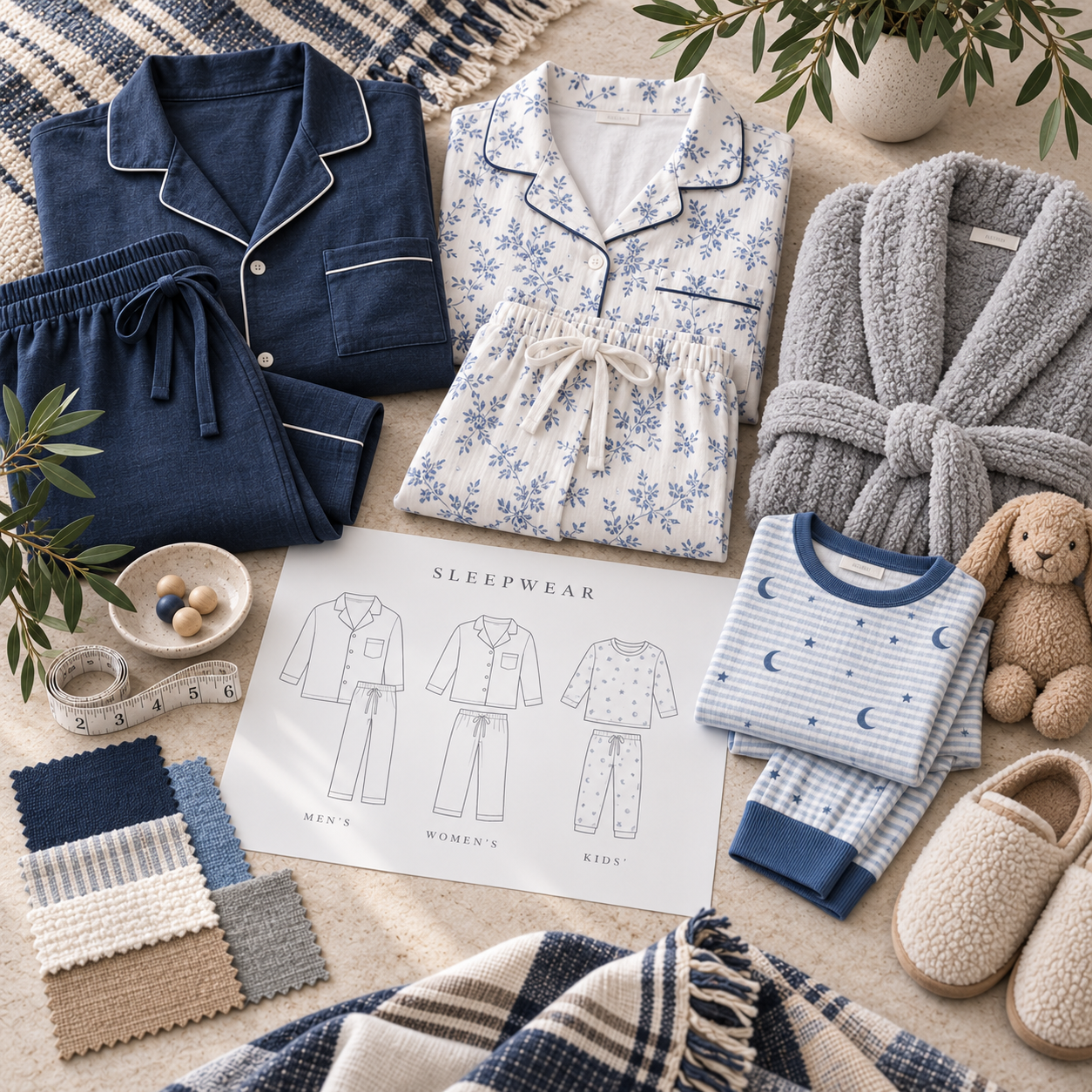
Develop sleepwear around comfort, fit, function and the end customer
Sleepwear may look uncomplicated, but developing it well requires thoughtful decisions around fabric, fit, construction, comfort, wash performance and intended use. When children’s sleepwear is involved, development can become significantly more technical because flammability, fit, labeling and testing requirements may influence the product from the beginning. Thread & Method helps emerging and growing brands develop sleepwear across age ranges and genders — from infant and children’s sleepwear to women’s and men’s pajamas, robes, lounge-sleep hybrids and seasonal collections.
What Makes Sleepwear Development Different?
Sleepwear is worn for long periods of time, close to the body and through repeated laundering. Depending on the product, development may need to consider:
• Softness and hand feel
• Breathability
• Fabric weight
• Stretch and recovery
• Thermal comfort
• Shrinkage
• Pilling and wash durability
• Seam comfort
• Waistband construction
• Fit and ease
• Seasonal weight
• Safety and flammability requirements
The product also needs to feel appropriate for the age, lifestyle, intended use and price positioning of the customer.
How Thread & Method Can Help
Our sleepwear development support is tailored to the product, customer and stage of the brand.
Product Strategy
Before development begins, we help clarify what should be developed and how the assortment should work together. That may include:
• Target customer
• Age range
• Product assortment
• Sleepwear versus lounge positioning
• Size range
• Price positioning
• Fabric strategy
• Print and color direction
• Seasonal needs
• Launch priorities
A focused strategy can also help reduce unnecessary fabrics, trims and minimum-order commitments.
Sleepwear Design Development
We help translate ideas and inspiration into clear product concepts. Depending on the collection, that may include:
• Pajama tops and bottoms
• Short sets
• Long sets
• Nightgowns
• Sleepshirts
• One-piece sleepers
• Robes
• Lounge-sleep hybrids
• Coordinated family sleepwear
The goal is to balance comfort, proportion, function, manufacturability and the overall brand aesthetic.
Fabric + Material Direction
Fabric is one of the most important decisions in sleepwear. We help evaluate materials based on softness, breathability, weight, stretch, recovery, shrinkage, pilling, wash performance, durability and cost.
Depending on the product, options may include cotton jersey, interlock, rib, brushed knits, fleece, woven cotton, flannel, poplin, lyocell blends and other sleep-appropriate fabrics.
For children’s sleepwear, fabric selection must also be considered alongside applicable flammability and regulatory requirements.
Children’s Sleepwear + Flammability Considerations
Children’s sleepwear requires an additional layer of development consideration because safety requirements may affect fit, fabric, construction and labeling.
In the United States, children’s sleepwear above certain infant sizes generally needs to follow one of two paths: meet applicable flame-resistance requirements or qualify as tight-fitting sleepwear under specific dimensional and design requirements.
Development considerations may include:
• Tight-fitting versus flame-resistant product strategy
• Garment measurements and fit
• Neck, wrist and ankle openings
• Rib and cuff construction
• Fabric selection
• Stretch and recovery
• Trim selection
• Closures
• Required labels and warnings
• Testing and documentation
Tight-fitting sleepwear is not simply a slim pajama. The garment needs to meet specific requirements to qualify under that approach.
Sleepwear Testing + Compliance
Testing and compliance should be considered during development rather than after the product has already been finalized.
Requirements can vary based on:
• Product type
• Age range
• Fit
• Fabric and construction
• Intended use
• Country or market where the product will be sold
A product sold in the United States may have different sleepwear, flammability, labeling or testing requirements than the same product sold in Canada, the United Kingdom, European Union or another market.
Depending on the product and destination market, considerations may include:
• Flammability testing
• Tight-fit dimensional requirements
• Flame-resistant materials
• Restricted substances
• Trim and component requirements
• Children’s product labeling
• Tracking labels
• Fiber content and care labeling
• Country-of-origin marking
• Third-party testing
• Required certificates and documentation
Thread & Method helps brands identify where these requirements may affect product design, fit, fabric, labeling, testing and manufacturing decisions. Final regulatory requirements should be confirmed with the appropriate testing laboratory, compliance specialist or legal resource for each market.
Tech Packs for Sleepwear
Sleepwear tech packs need to clearly communicate fit, construction and material expectations. Depending on the style, a tech pack may include:
• Measurements
• Construction details
• Stitching
• Fabric specifications
• Rib specifications
• Elastic
• Drawcords
• Buttons, snaps or zippers
• Labels
• Artwork and print placement
• Colorways
• Packaging direction
For children’s sleepwear, technical documentation may also need to communicate measurements and construction details related to the intended compliance approach.
Sleepwear Fit + Sample Review
During sample review, we may evaluate:
• Overall fit and ease
• Comfort
• Proportion
• Waistband tension
• Cuff fit
• Neck openings
• Fabric behavior
• Shrinkage
• Print execution
• Construction
• Closures
• Overall appearance
For children’s sleepwear, sample review may also include checking the garment against applicable fit specifications before testing and production approval.
Sleepwear Sourcing + Manufacturer Guidance
Not every apparel factory is equally suited to sleepwear. A manufacturer may need experience with:
• Knit and woven sleepwear
• Children’s sleepwear
• Tight-fitting pajama programs
• Flame-resistant sleepwear
• Print development
• Fabric sourcing
• Rib and elastic sourcing
• Labeling requirements
• Testing coordination
• Quality control
We help brands evaluate whether potential manufacturing partners have the appropriate capabilities for the product and intended sales market.
Common Sleepwear Development Mistakes
Brands often run into problems when they:
• Choose fabric based only on softness
• Ignore shrinkage or wash performance
• Underestimate waistband and elastic development
• Develop too many prints or colorways
• Treat sleepwear exactly like casual apparel
• Assume children’s sleepwear requirements are the same as adult apparel
• Assume “snug” automatically means a garment qualifies as tight-fitting sleepwear
• Wait until production to think about flammability testing
• Assume the same compliance requirements apply in every country
• Choose factories without relevant sleepwear experience
• Rush sampling to meet an unrealistic launch date
These issues are much easier to address during development than after production begins.
Who We Work With
Thread & Method can support brands developing:
• Women’s sleepwear
• Men’s sleepwear
• Children’s sleepwear
• Infant sleepwear
• Pajama sets
• Nightgowns and sleepshirts
• Robes
• One-piece sleepers
• Lounge-sleep collections
• Family matching sleepwear
• Seasonal sleep programs
We can support a single hero product, a focused capsule or a broader sleepwear assortment.
Why Thread & Method?
Our team brings decades of experience across sleepwear, children’s apparel, knits, product development, sourcing and production.
We understand that successful sleepwear needs to balance comfort, fit, fabric, construction, commercial strategy and in some categories highly specific regulatory requirements.
That means we consider not only how a product should look, but how it should feel, perform after repeated wear and washing, be manufactured and meet the needs of the markets where it will be sold.
Ready to Develop Your Sleepwear Collection?
If you are developing women’s, men’s, children’s or infant sleepwear and need experienced product-development support, Thread & Method can help.
Book a complimentary discovery call to discuss your product, development stage and goals.