
Activewear
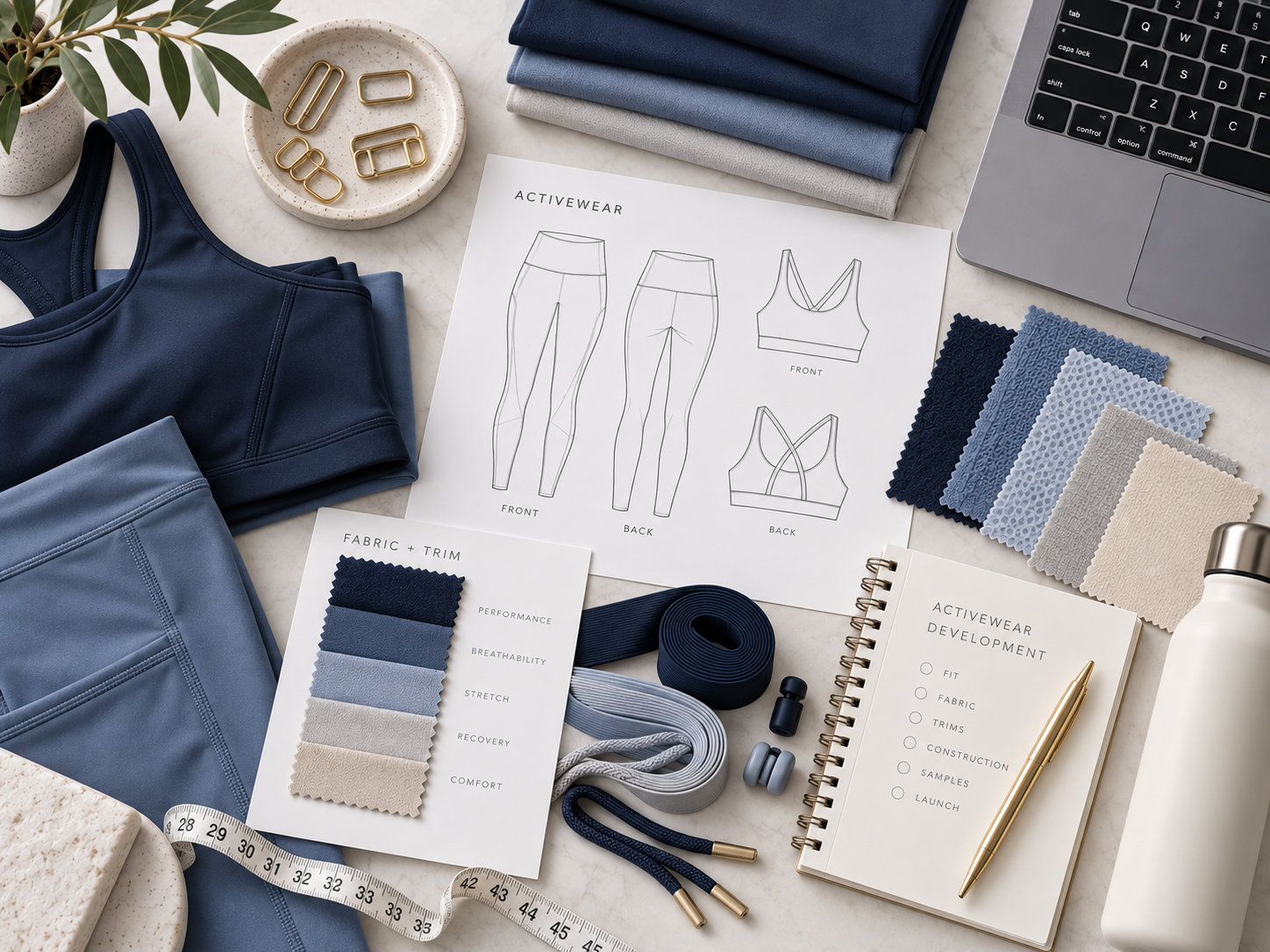
Build activewear that performs as well as it looks
Activewear can be one of the more challenging apparel categories to develop well. Fit matters more. Fabric performance matters more. Construction matters more. And small decisions around stretch, recovery, support, seam placement, compression and fabrication can have a major impact on how the final product performs. Thread & Method helps emerging activewear brands turn product ideas into commercially viable, production-ready garments. Whether you are developing leggings, sports bras, tanks, shorts or a broader active collection, we can help guide the process from strategy through sampling and production preparation.
What Makes Activewear Development Different?
Activewear has to do more than look good. Depending on the product, it may need to provide:
Stretch and recovery
Support
Compression
Moisture management
Breathability
Coverage
Durability
Shape retention
Comfort during movement
Those performance requirements affect nearly every product-development decision. A silhouette that works in a casual knit may not perform the same way in a technical activewear fabric. A fabric that looks beautiful may not have enough recovery. A sports bra may require a very different construction strategy depending on the intended support level. That is why activewear development benefits from both design thinking and technical product experience.
How Thread & Method Can Help
Our activewear development support is tailored to the stage and needs of the brand.
Product Strategy
Before development begins, we help clarify what should be developed and why. That may include:
Target customer
Intended activity level
Product assortment
Price positioning
Competitive landscape
Key product benefits
Launch priorities
A strong product strategy helps prevent unnecessary development and keeps the assortment focused.
Activewear Design Development
We help translate ideas and inspiration into clear product concepts. That may include:
Silhouette
Seam placement
Waistband construction
Pocket placement
Bra shape
Strap configuration
Necklines
Lengths
Coverage
Layering
Functional details
The goal is to create a product that balances aesthetics, performance and manufacturability.
Fabric + Material Direction
Fabric selection is one of the most important decisions in activewear. We help evaluate materials based on intended use, hand feel, stretch, recovery, weight, opacity, support and construction needs. Depending on the brand, this may include traditional performance fabrics as well as natural-fiber or lower-synthetic alternatives.
Natural-Fiber Activewear Development
There is growing interest in activewear made with materials such as:
Cotton
Merino wool
Lyocell
Hemp
Bamboo-derived fibers
Other natural or lower-synthetic blends
Developing performance apparel with these materials can require a different approach than working with conventional polyester and nylon-spandex fabrics. Natural materials may behave differently in stretch, recovery, moisture management, durability and fit. We can help evaluate these tradeoffs early in the development process so product expectations remain realistic.
Tech Packs for Activewear
Activewear tech packs need to clearly communicate both construction and functional expectations. Depending on the style, a tech pack may include:
Measurements
Seam construction
Stitching
Panels
Gussets
Waistbands
Elastic specifications
Strap details
Linings
Pockets
Labels
Fabric and trim information
Artwork or branding placement
Clear technical documentation helps reduce confusion during sampling and production.
Activewear Fit + Sample Review
Fit is especially important in activewear because the garment must work on the body while the customer is moving. During sample review, we may evaluate:
Overall fit
Compression
Coverage
Rise
Waistband stability
Gaping
Strap placement
Support
Seam position
Length
Mobility
Fabric recovery
Construction quality
A sample can look correct when standing still and still fail during movement. That is why fit review should consider how the garment actually performs.
Leggings Development
Leggings may appear simple, but they can be technically demanding. Development considerations may include:
Rise
Waistband height
Waistband stability
Gusset construction
Seam placement
Compression
Opacity
Fabric recovery
Pocket construction
Length
Shape retention
Small changes can significantly affect comfort and fit.
Sports Bra Development
Sports bras require careful consideration of intended activity and support. Development may involve:
Support level
Strap configuration
Underband construction
Neckline
Coverage
Lining
Elastic
Cup shaping
Stabilization
Fabric weight
Stretch and recovery
The right solution depends heavily on how the product is intended to be worn.
Activewear Sourcing + Manufacturer Guidance
Not every apparel factory is equally suited to activewear. A manufacturer may need experience with:
Stretch fabrics
Performance construction
Flatlock or specialized seams
Elastic applications
Bra construction
Compression garments
Technical fabric handling
We help brands consider whether a potential manufacturing partner has the right capabilities for the product being developed.
How Long Does Activewear Development Take?
Timelines vary depending on the complexity of the product, fabric availability, factory capabilities and number of sample rounds required. Technical garments generally require more development than simple apparel. A new fabric, unusual construction method or high-performance expectation can add time to the process. We help brands build realistic development timelines based on the actual product rather than an idealized launch date.
Common Activewear Development Mistakes
Brands often run into problems when they:
Choose fabric based only on appearance or softness
Underestimate the importance of recovery
Try to achieve too many performance benefits in one fabric
Skip movement-based fit evaluation
Select factories without activewear experience
Rush sampling
Use a competitor garment as the only development reference
Assume the first sample will perform correctly
Overcomplicate the first collection
These mistakes can be expensive once production begins. Addressing them earlier is much easier.
Who We Work With
Thread & Method works with emerging and growing activewear brands, including founders who are:
Developing their first collection
Launching leggings or sports bras
Exploring natural-fiber activewear
Adding activewear to an existing brand
Improving fit or construction
Reworking an underperforming product
Preparing a collection for manufacturing
You do not need to have every technical detail figured out before contacting us.
Why Thread & Method?
Our team brings decades of apparel experience across product strategy, design, technical development, sourcing and production. We understand both the creative and commercial sides of activewear development. That means we consider not just what a product should look like, but how it should fit, perform, be manufactured and fit into the overall brand strategy.
Ready to Develop Your Activewear Collection?
If you are developing an activewear brand or product and need experienced guidance, Thread & Method can help you determine the right next step.
Book a complimentary discovery call to discuss your product, development stage and goals.