
Accessories
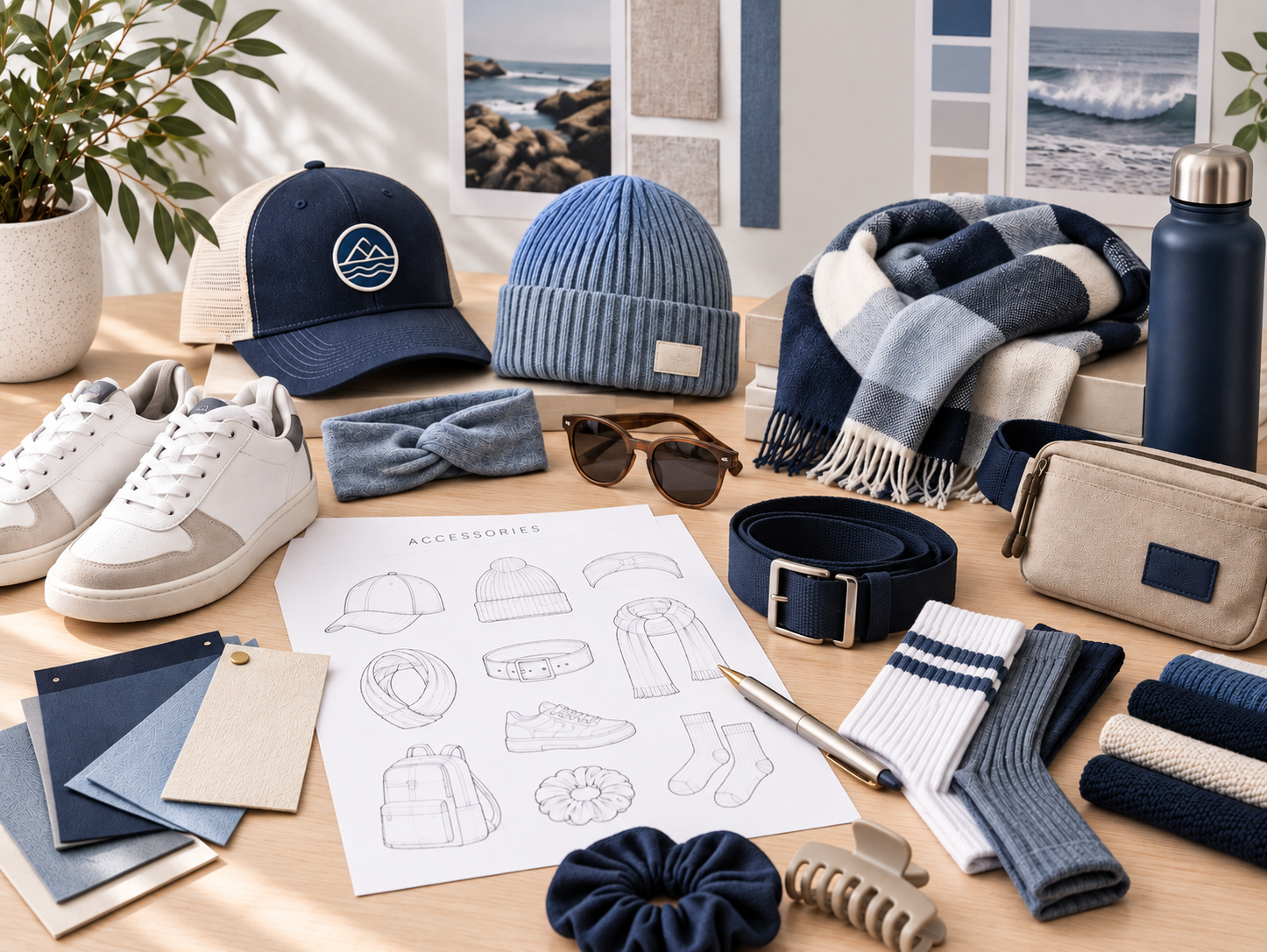
Develop accessories that complete the product story
Accessories can add depth to a brand, expand an assortment and create additional ways for customers to engage with a collection. But successful accessory development still requires thoughtful decisions around materials, construction, sizing, fit, function, hardware, sourcing and manufacturing capability. Thread & Method helps emerging and growing brands develop soft and fashion accessories from product strategy and design through technical development, sampling and production preparation. Whether you are developing hats, belts, socks, headbands, sunglasses, footwear or a broader accessory assortment, we can help guide the process from concept through manufacturing.
What Makes Accessories Development Different?
Accessories often involve different construction methods, materials and suppliers than apparel. Depending on the product, development may need to consider:
• Sizing and fit
• Hardware
• Material durability
• Stretch and recovery
• Shape retention
• Comfort
• Adjustability
• Closure systems
• Reinforcement
• Branding placement
• Custom components
• Minimum order quantities
• Specialized manufacturing
A small accessory may look simple, but the construction and sourcing behind it can be highly specific.
How Thread & Method Can Help
Our accessory development support is tailored to the product, target customer and stage of the brand.
Product Strategy
Before development begins, we help clarify which accessories make sense for the brand and how they should support the larger assortment. That may include:
• Target customer
• Product assortment
• Intended use
• Price positioning
• Material direction
• Color strategy
• Branding opportunities
• Seasonal relevance
• Cross-merchandising with apparel
• Launch priorities
A focused accessory assortment can add value without creating unnecessary production complexity.
Accessories Design Development
We help translate ideas and inspiration into clear, manufacturable product concepts. Depending on the assortment, that may include:
• Baseball caps
• Trucker hats
• Beanies
• Bucket hats
• Visors
• Belts
• Socks
• Headbands
• Scrunchies and hair accessories
• Sunglasses
• Casual footwear
• Slippers
• Other soft or fashion accessories
The goal is to create products that feel cohesive with the brand while still functioning well as individual products.
Hats + Headwear
Headwear development may involve more technical decisions than the finished product suggests. Depending on the style, considerations may include:
• Crown shape
• Panel construction
• Brim shape
• Circumference
• Adjustability
• Closure type
• Lining
• Embroidery
• Patches
• Labels
• Material weight
• Structure
Caps, beanies, bucket hats and visors may all require different manufacturing capabilities and fit strategies.
Belts
Belts require careful consideration of materials, sizing and hardware. Development may include:
• Width
• Length
• Size range
• Buckle shape
• Hole spacing
• Webbing
• Leather or alternative materials
• Stitching
• Edge finishing
• Hardware finish
• Branding
The relationship between strap material and hardware can significantly affect both quality and cost.
Socks
Socks are highly dependent on yarn, knit construction and factory capability. Development may need to consider:
• Yarn composition
• Knit structure
• Cushioning
• Rib tension
• Compression
• Height
• Heel and toe construction
• Size range
• Graphics or jacquard
• Moisture management
• Durability
Sock development is usually best handled by manufacturers with specialized knitting equipment and category experience.
Headbands + Hair Accessories
Headbands and soft hair accessories may require attention to:
• Width
• Stretch
• Elastic
• Recovery
• Seam placement
• Fabric hand feel
• Grip
• Comfort
• Twist or knot construction
• Sizing
• Decorative details
Small changes in tension or construction can significantly affect comfort and performance.
Sunglasses
Sunglasses involve a different product-development process than textile accessories. Depending on the design, development may include:
• Frame shape
• Frame material
• Lens shape
• Lens tint
• Bridge width
• Temple length
• Hardware
• Branding
• Case or packaging
• Fit
• Testing and compliance
Sunglasses may also require specific optical, safety or labeling standards depending on the market where they will be sold.
Footwear
Footwear development is highly specialized and may require different factory capabilities than apparel or soft accessories. Depending on the product, development may consider:
• Last shape
• Size range
• Upper materials
• Lining
• Sole construction
• Footbed
• Closures
• Padding
• Hardware
• Branding
• Comfort
• Wear testing
Thread & Method can help brands define product direction, technical expectations and sourcing needs, while working with specialized footwear partners where appropriate.
Materials + Trim Direction
Accessory development may involve a broader range of materials than apparel. Depending on the product, that may include:
• Knit fabrics
• Wovens
• Webbing
• Elastic
• Leather
• Faux leather
• Suede
• Mesh
• Metal hardware
• Plastic components
• Rubber
• Foam
• Yarn
• Specialty trims
Material selection should support the product’s function, durability, aesthetic and target cost.
Testing + Compliance
Some accessories may be subject to testing, labeling or regulatory requirements depending on the product and sales market. Requirements may vary based on:
• Product type
• Material
• Age range
• Intended use
• Components
• Country or market where the product will be sold
Depending on the product, considerations may include:
• Restricted substances
• Lead or heavy metals
• Nickel release
• Material safety
• Small components
• Sunglass lens or optical requirements
• Footwear material testing
• Fiber-content labeling
• Country-of-origin marking
• Third-party testing
• Required certificates or documentation
Testing and compliance should be considered during development rather than after the product has already been finalized.
Tech Packs for Accessories
Accessories need clear technical documentation just like apparel. Depending on the product, a tech pack may include:
• Technical sketches
• Measurements
• Materials
• Construction details
• Hardware
• Closures
• Stitching
• Artwork
• Embroidery
• Logo placement
• Colorways
• Packaging direction
For highly specialized accessories, additional factory-specific specifications may also be required.
Sample Review + Development
Sampling is where material, proportion and function can be properly evaluated. During sample review, we may assess:
• Size and proportion
• Fit
• Comfort
• Material quality
• Hardware
• Construction
• Function
• Branding placement
• Color
• Overall execution
Accessories may require multiple sample rounds to resolve both aesthetic and functional details.
Accessories Sourcing + Manufacturer Guidance
Different accessory categories often require different manufacturing partners. A factory producing socks may not produce hats. A cap manufacturer may not produce belts. A footwear supplier requires very different capabilities from a textile accessory factory. We help brands evaluate potential manufacturing partners based on:
• Category experience
• Specialized machinery
• Material capability
• Hardware sourcing
• Minimum order quantities
• Sampling support
• Quality
• Communication
• Testing coordination
• Production capacity
The right manufacturing partner should match the specific product rather than simply offer the lowest price.
Common Accessories Development Mistakes
Brands often run into problems when they:
• Assume accessories are simpler to develop than apparel
• Use one supplier for categories outside its expertise
• Choose materials based only on appearance
• Underestimate hardware costs
• Ignore fit and sizing
• Skip wear or function testing
• Add too many accessory types at launch
• Overuse custom components
• Ignore minimum order quantities
• Wait until production to consider testing
• Choose factories without relevant category experience
These issues are much easier to address during development than after production begins.
Who We Work With
Thread & Method can support brands developing:
• Baseball caps and trucker hats
• Beanies
• Bucket hats and visors
• Belts
• Socks
• Headbands
• Scrunchies and hair accessories
• Sunglasses
• Casual footwear
• Slippers
• Coordinated accessory capsules
We can support a single accessory, a focused assortment or accessories developed alongside a broader apparel collection.
Why Thread & Method?
Our team brings decades of experience across apparel, accessories, product development, sourcing and production. We understand that successful accessories need to feel like a natural extension of the brand while still being developed around the specific technical and manufacturing requirements of each product. That means we consider not only how an accessory should look, but how it should fit, function, be manufactured, meet target cost and support the larger assortment.
Ready to Develop Your Accessories Collection?
If you are developing fashion or soft accessories and need experienced product-development support, Thread & Method can help.
Book a complimentary discovery call to discuss your product, development stage and goals.